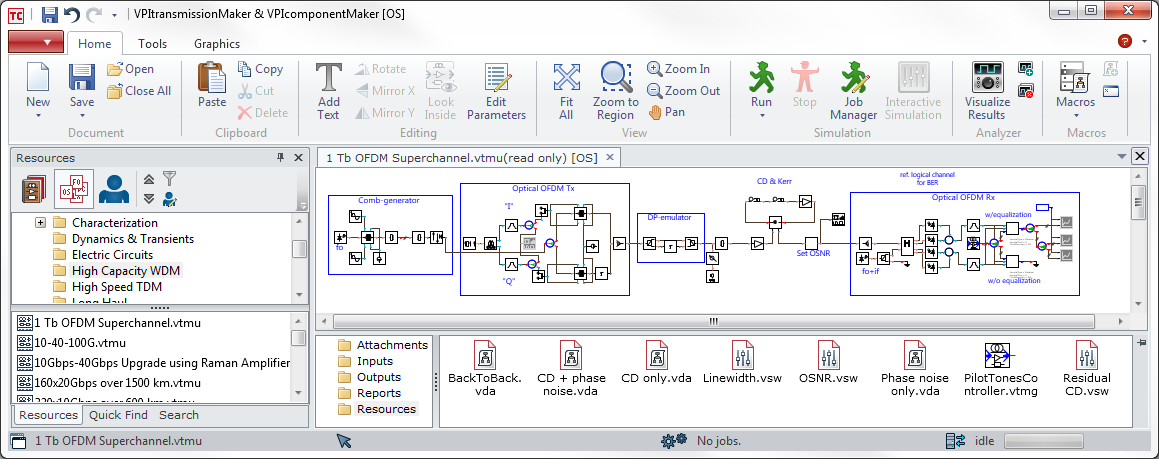

VPItransmissionMaker™ Optical Systems accelerates the design of new photonic systems and subsystems for short-range, access, metro and long haul optical transmission systems and allows technology upgrade and component substitution strategies to be developed for existing fiber plants.
The combination of a powerful graphical interface, a sophisticated and robust simulation scheduler and realistic simulation models together with flexible optical signal representations at different degrees of
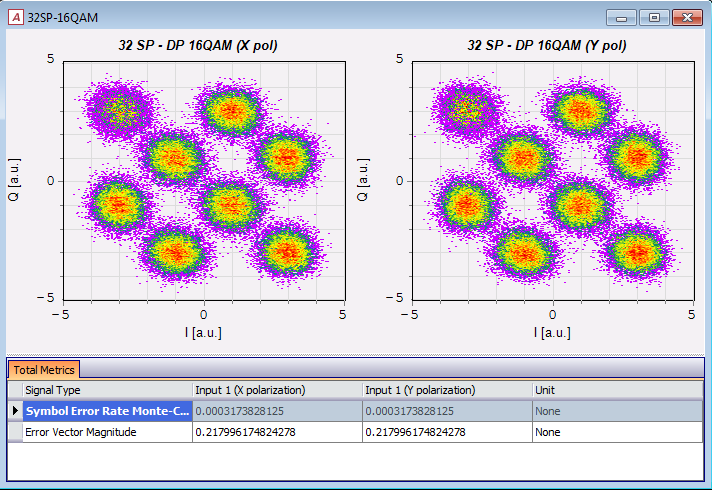
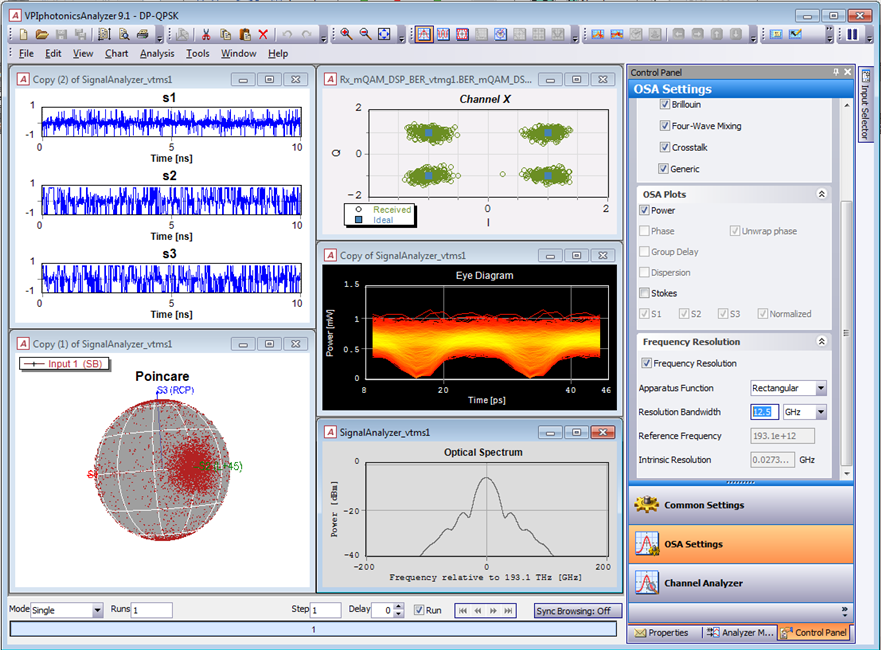
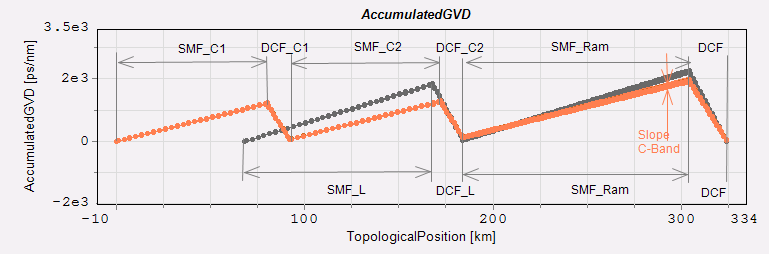
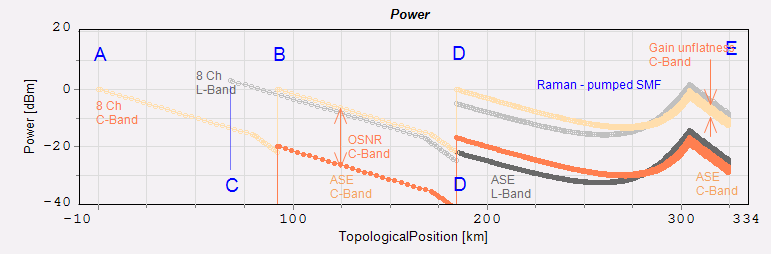
abstraction enables accurate and efficient modeling of any transmission system including bidirectional links, ring and mesh networks. Sampled signal modeling supports detailed simulation of the optical field in the time domain enabling, for instance, bit-error-rate estimation and eye-diagram analysis. Time-averaged signal representation facilitates efficient modeling of complex systems without the need to run long-lasting simulations as they allow the tracking, visualization and analysis of signal properties along a link.
This sophisticated virtual test-bed environment facilitates the definition of components requirements and risks evaluation in component choice by considering the details of systems design. An unrivaled range of photonic and electronic modules (700+) and design templates (500+) are provided, with regular updates on the VPIphotonics Forum.
Interactive Simulation, Macros and Design-Assistants, simulation scripting, data import with automatic file format conversion and cosimulation using standard programming languages streamline and
capture design processes. Technical marketing is supported, by providing a dynamic environment to design, evaluate, demonstrate and compare the technical and cost superiority of solutions.
This award-winning solution is used by forward-looking groups in more than 100 private companies including service providers, system integrators and equipment manufacturers as well as in 140 public R&D institutions & universities.